Amanita muscaria is not a federally scheduled controlled substance in the United States, which is why amanita mushroom gummies can be sold openly in most of the country. But "not federally scheduled" is not the same as "legal everywhere" — state and local rules vary, several states have already moved to restrict it, and the picture is changing fast enough that any list published today may be wrong by next session of your legislature.
So instead of handing you a state-by-state chart we can't stand behind, here's how the law actually works, what's driving the changes, and how to check your own state in about five minutes.
Why amanita sits outside the Controlled Substances Act
The Controlled Substances Act schedules specific substances. Psilocybin and psilocin are named in Schedule I. Muscimol and ibotenic acid — the active compounds in Amanita muscaria — are not.
That's the whole legal basis. It isn't an approval, an endorsement, or a considered judgment that amanita is safe. It's an absence. Federal law never addressed this mushroom because it was never a significant enough market to attract attention. Now that it is, that's beginning to change.
Worth being precise: the FDA has not approved amanita muscaria as a food ingredient, and has expressed concern about mushroom products containing it. Products like Sillies and Tranqui Gum are sold as consumer products, not as approved foods or drugs, and no amanita product can legally claim to treat any condition.
The state layer is where it gets real
States can and do regulate substances the federal government leaves alone. Louisiana has restricted amanita muscaria, and we do not ship amanita products — or Delta-8 and Delta-9 products — to Louisiana. Other states have introduced bills, passed age restrictions, added labeling requirements, or moved amanita into a regulated category alongside hemp cannabinoids.
Some patterns worth knowing:
- Age gating is the most common first step. Many states that touch this category start with a 21+ rule rather than a ban.
- Amanita often gets swept into hemp bills. Legislators writing rules for Delta-8 frequently add intoxicating mushroom products to the same bill, even though the chemistry is unrelated.
- City and county rules exist too. A state can be permissive while a municipality is not.
- Effective dates lag passage. A law passed in spring may not take effect until the following year, which is why two sources can both be "right" and disagree.
How to actually check your state
This takes less time than reading a blog post about it.
- Search your state legislature's own site for "amanita" and for "muscimol." Legislature sites are ugly but authoritative. A retailer's map is not.
- Check your state department of agriculture or health. Consumable product rules often live there rather than in criminal statute.
- Look at the bill's effective date, not just whether it passed.
- Check whether your state regulates hemp-derived THC separately. If you're also shopping our hemp THC collection, that's a different rulebook with its own state-by-state variation.
- If you need certainty, ask a lawyer in your state. We are a gummy company. We're being straight with you about the limits of that.
The hemp side, since people ask in the same breath
Hemp-derived products containing no more than 0.3% Delta-9 THC by dry weight are federally compliant under the 2018 Farm Bill. That's the standard our hemp products are built to. But the same state-level fragmentation applies here, arguably more so — several states have restricted Delta-8 specifically, some cap total THC per serving or per package, and federal legislation on hemp is under active discussion.
Two things that trip people up:
Federally compliant does not mean drug-test-safe. Hemp-derived THC will likely show up on a drug test. Standard panels detect THC metabolites and don't care whether the source plant was hemp or marijuana. If you're subject to testing at work, that risk is real regardless of what the Farm Bill says. Products like Comfort and Astral-O are compliant hemp products and can still cost you a test.
Shipping legality and possession legality are separate questions. We restrict where we ship based on the rules we can verify. That restriction list is about our compliance obligations. Understanding what's legal for you to possess and use where you live is on you.
What to look for in a product, whatever your state allows
Legal status is one filter. Product quality is another, and the second one is easier to evaluate.
- Third-party lab results (COAs) tied to the specific batch you're buying — not a generic PDF from two years ago.
- A stated amount of active ingredient per gummy, not just per package or per "blend."
- Clear labeling of what's actually in it. "Proprietary mushroom blend" with no numbers tells you nothing.
- 21+ purchase policy and honest effect language. A brand promising to fix your health problems is telling you something about how it operates.
- A real US address and a way to reach a human. We're in Oregon; our FAQ covers shipping, testing, and returns.
The honest summary
Amanita gummies are legal to sell and buy in most US states right now because federal law never scheduled the compounds involved. That situation is stable in some states, actively shifting in others, and already restricted in a few. Nobody, us included, can hand you an accurate national map that stays accurate.
Check your state, buy from a company that publishes its lab results, keep it 21+, don't drive after use, and store it where kids and pets can't get to it.
Common questions
Can amanita gummies be shipped to my state?
We ship amanita products to most US states. Louisiana is excluded, and that exclusion also covers our Delta-8 and Delta-9 products. Our checkout reflects current restrictions, so the most reliable answer is to enter your address and see what's available. Restrictions change as laws change.
Is amanita muscaria the same as psilocybin legally?
No. Psilocybin and psilocin are Schedule I federally. Amanita's active compounds, muscimol and ibotenic acid, are not federally scheduled. They're chemically and pharmacologically distinct — amanita acts largely on GABA receptors, not the serotonin receptors psilocybin targets. Do not assume anything true of one applies to the other.
Will an amanita gummy cause a failed drug test?
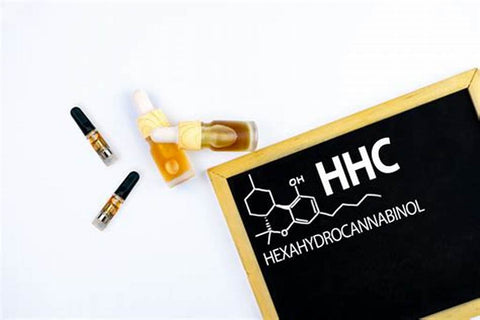
Standard workplace panels screen for THC, opiates, amphetamines and similar compounds, not muscimol. But if you're taking a product that combines mushroom with hemp cannabinoids — Twisted Treats includes HHC, for example — the hemp component can absolutely show up. Read the label and know what you're taking.
These statements have not been evaluated by the Food and Drug Administration. This product is not intended to diagnose, treat, cure or prevent any disease. Must be 21 or older.